DESCRIPTION
The BRD Light Steel Villa is a revolutionary residential solution constructed using innovative lightweight, high-strength steel. Fully customizable, the system offers a wide selection of innovative building materials, including insulated and fire-resistant roofs, walls, and floors, ensuring a comfortable and safe living space. Furthermore, the BRD system focuses on efficiency and sustainability, offering seismic resistance, rapid on-site assembly, and an energy-efficient and environmentally friendly living environment. Experience the future of living with a BRD Light Steel Villa.
INTRODUCTION TO LIGHT STEEL HOUSES
Light steel houses use 0.8mm, 1.0mm, and 1.2mm thick hot-dip galvanized steel strips and light steel keels synthesized using cold rolling technology. After precise calculation and support and combination with auxiliary parts, they have a reasonable bearing capacity to replace traditional houses.
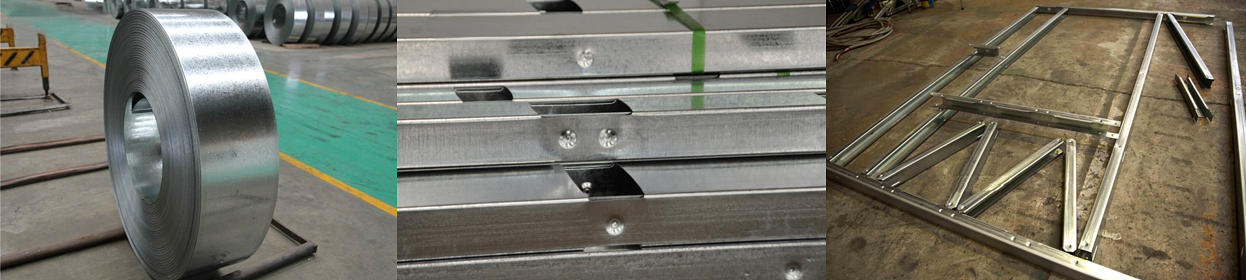
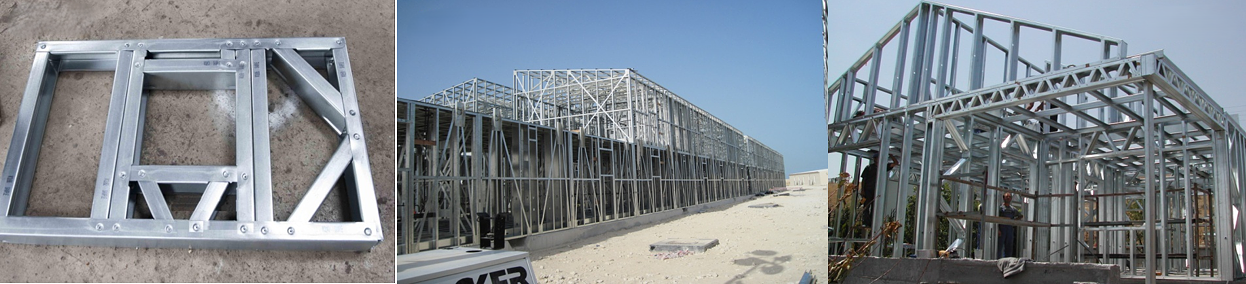
LIGHT STEEL HOUSE MAIN FRAME
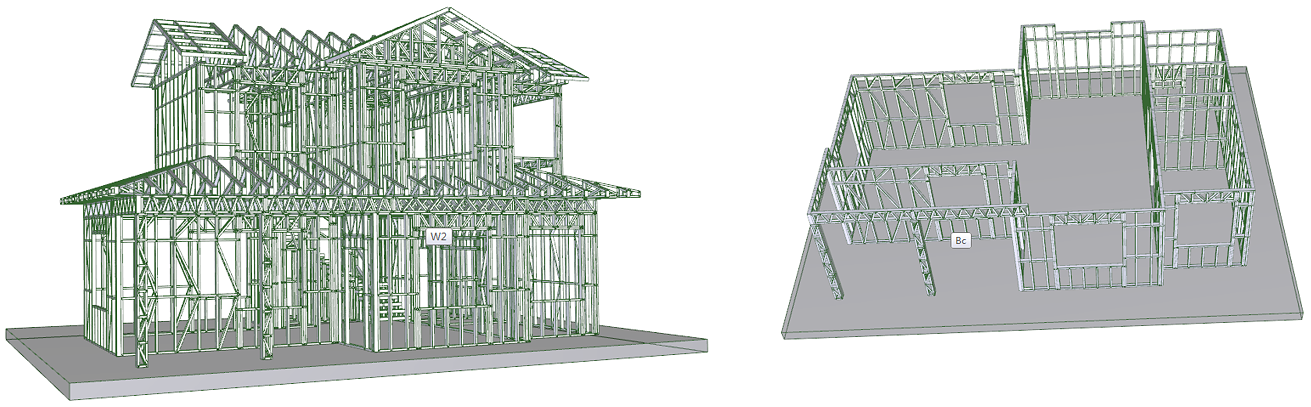
Light steel main frame One-story frame
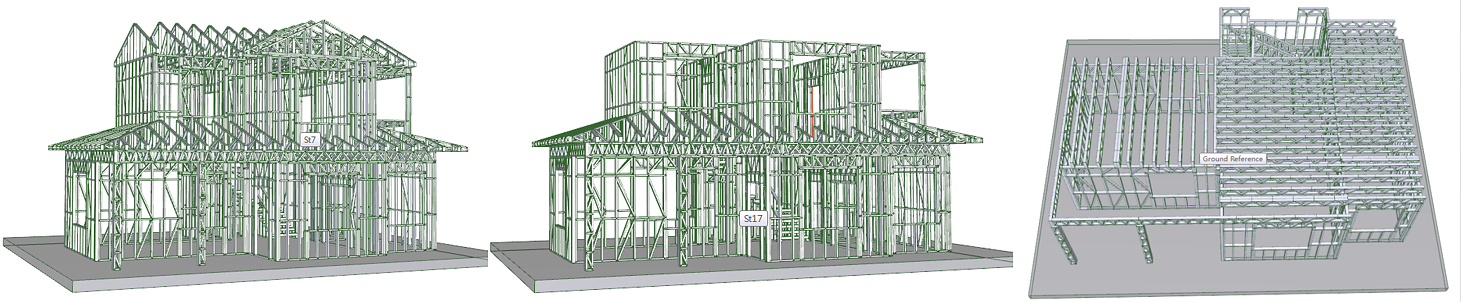
Second-floor roof truss and walls First-floor roof truss and second-floor walls Stairs and second-floor floor
LIGHT STEEL HOUSE CONSTRUCTURE
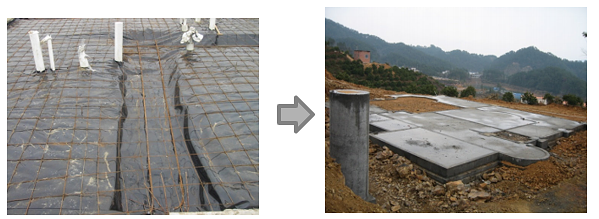
The construction of light steel houses includes six major steps: foundation construction, keel installation, water and electricity installation, interior and exterior wall construction, floor construction and roof construction.


Keel installation 


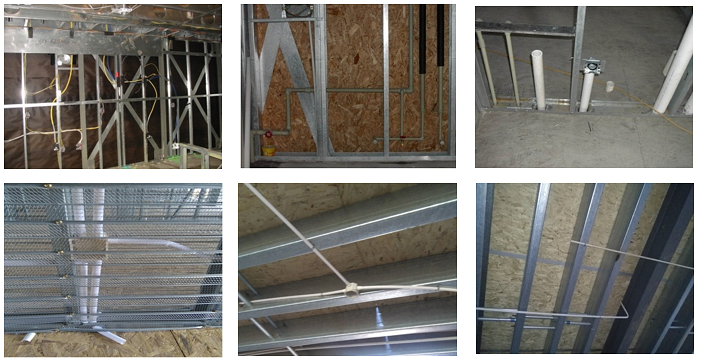
Hydropower projects
The water and electricity installation project is basically the same as the ordinary practice. The main principle is that all pipelines must be buried in the wall.
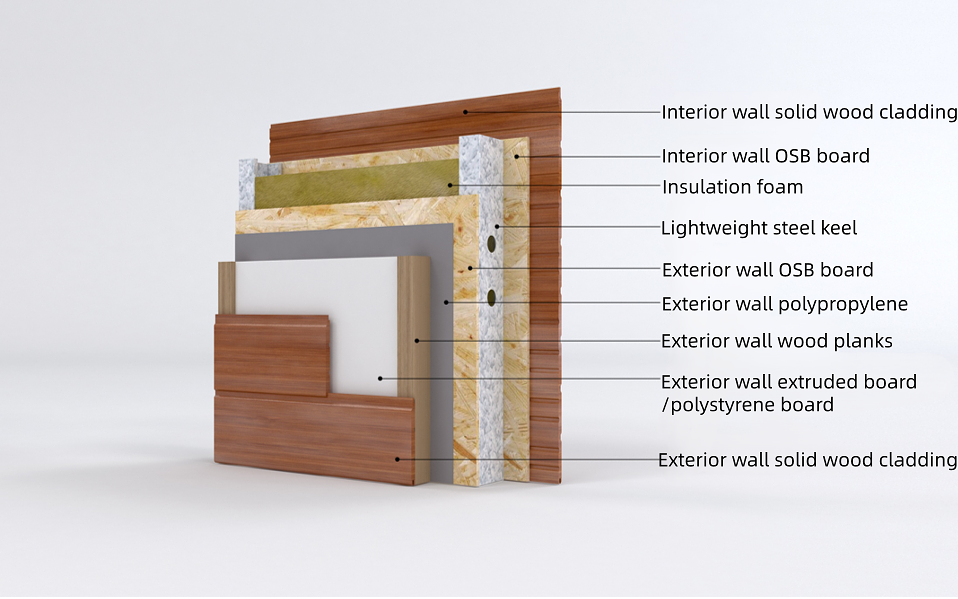
Wall construction plan
Ordinary light steel wall solution 1
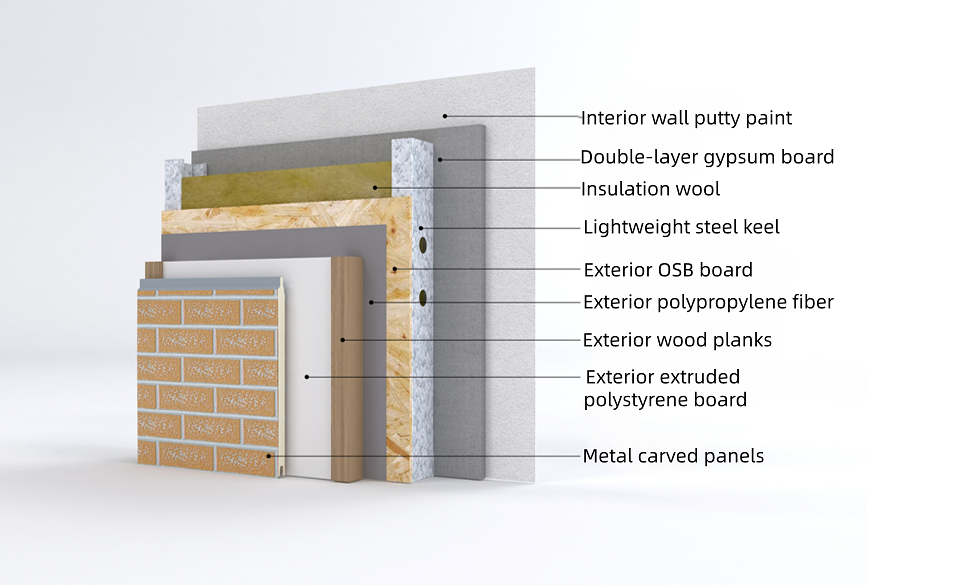
Ordinary light steel wall solution 2
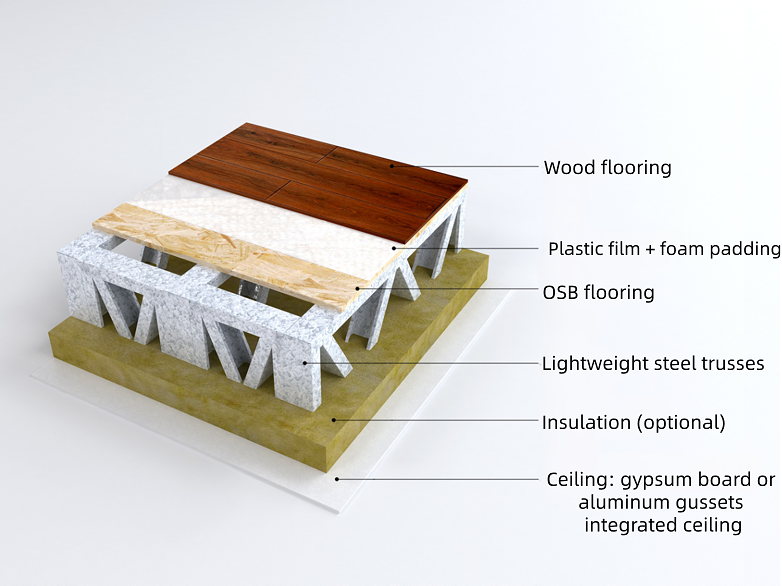
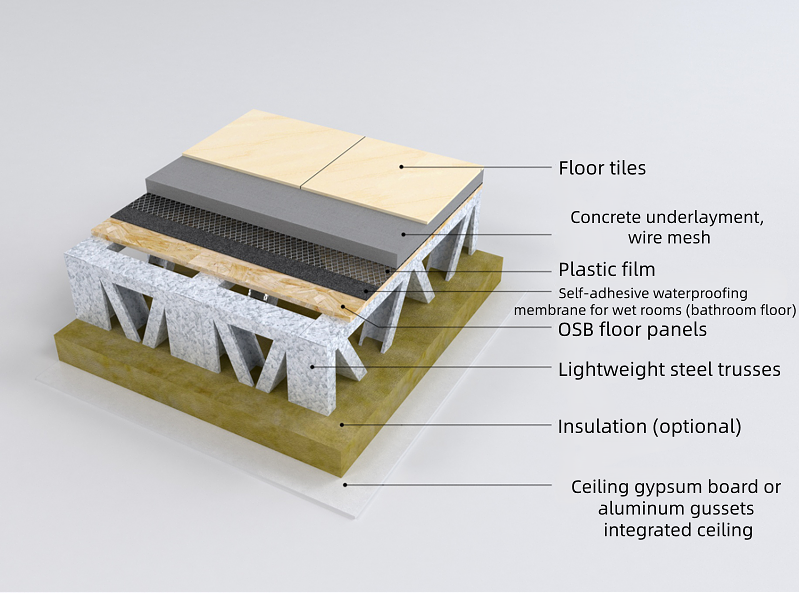
Floor Engineering
Floor Plan 1
Floor Plan 2
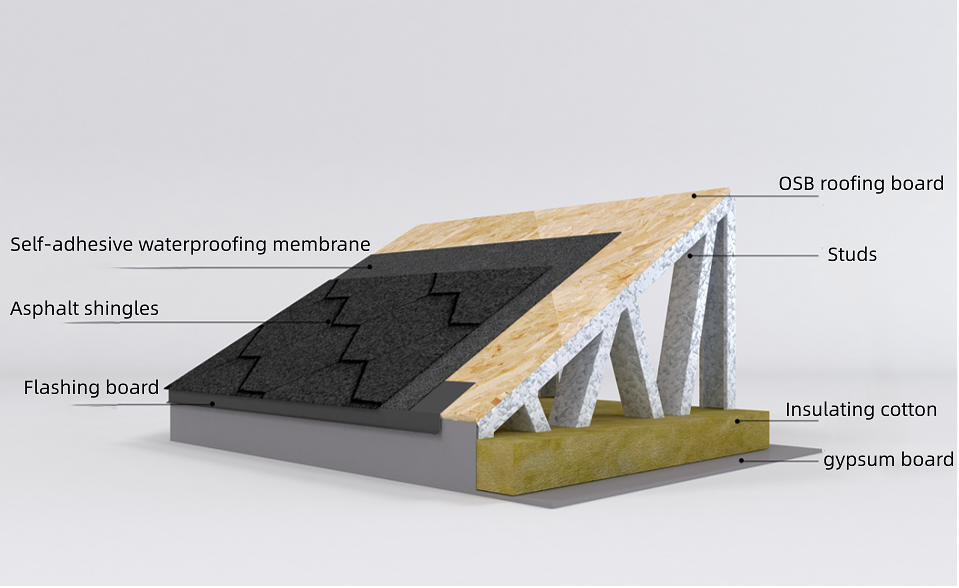
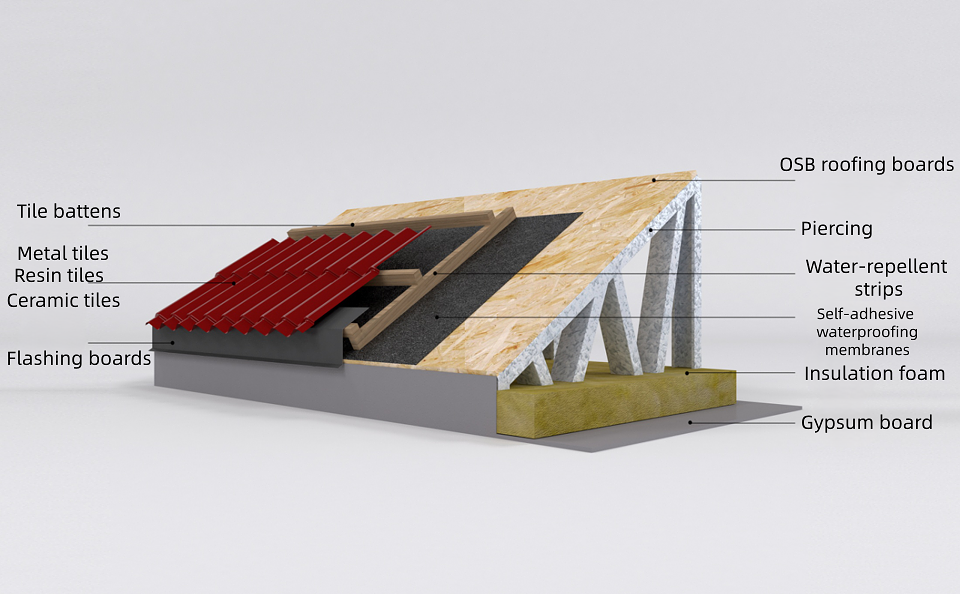
Roof construction
Roof construction plan 1
Roof construction plan 2
Light Steel Villas Uses and Benefits
Earthquake- and wind-resistant, safe and stable.
Light steel structures are lightweight, strong, and ductile, effectively absorbing earthquake energy and far exceeding traditional brick-concrete structures in terms of seismic performance. Furthermore,
their overall structure is sturdy and can effectively withstand strong winds, ensuring safe living.
Energy-saving and environmentally friendly, green and livable.
The main material is recyclable steel, resulting in minimal construction waste during construction and meeting green building standards. Walls are filled with thermal insulation materials for a strong seal,
keeping the home warm in winter and cool in summer, effectively reducing heating and cooling energy consumption and achieving significant energy savings.
Quick construction, shortened construction schedule.
All components are prefabricated in the factory with high precision. On-site assembly is done like building blocks, minimizing weather and seasonal impacts. Construction speed is more than twice that of
traditional buildings, significantly shortening construction schedules and enabling faster occupancy.
Efficient space and flexible layout.
Thin walls (approximately half the thickness of traditional brick walls) effectively increase the usable area. The wide interior spans and minimal load-bearing walls allow for flexible division and personalized
layouts tailored to the client's needs.
High-quality, durable and comfortable.
Industrialized production ensures uniform and stable component quality, avoiding the common quality issues associated with traditional craftsmanship. The structure is resistant to cracking and deformation,
insect-resistant, and mildew-resistant, offering excellent durability and high living comfort.
Diverse, aesthetically pleasing, and economical appearances.
A wide range of exterior finish materials (such as natural stone paint, metal cladding, and wood cladding) allows for a variety of architectural styles. While the overall cost varies depending on the configuration,
the rapid construction, short construction period, and high floor space efficiency offer significant cost-effectiveness throughout the lifecycle.


